these amounts belong to research
CJC-1295 Ipamorelin Dosage Has No Tested Blend Amount
Studies used different amounts in people and animals. No study tells you what amount of the mixed product is safe.
A study amount isn’t a care plan
A dose may look like one simple figure. The person or animal behind that figure changes its meaning. This page lists CJC-1295 Ipamorelin dosage amounts from published work. You won’t get a plan or schedule here.
Long-lasting CJC-1295 remains in blood for days. Ipamorelin leaves within hours. The short CJC-1295 version fades near half an hour. No study has measured the total growth-hormone rise from a set routine. You can see who or what received every amount. These facts aren’t directions. The papers don’t settle what is safe at your age.
Cjc 1295 ipamorelin dosage studies tested the drugs apart
These amounts come from separate drug tests. None tells you what to take.
Long-lasting CJC-1295. Healthy adults received 30–90 micrograms for each kilogram the person weighed under the skin. Micrograms are millionths of a gram. This Phase 1 work checked how your body might handle the drug. It didn’t prove a benefit for you [1]. Mouse studies used 2 micrograms each day. In people, 30 or 60 micrograms for each kilogram the person weighed caused the 2- to 10-fold growth-hormone rise. Growth factor 1, a hormone your liver makes to guide cell growth, rose 1.5- to 3-fold [1].
Short CJC-1295. No full human study tracked how the body clears it. Some lab papers propose about 100–200 micrograms per shot. No completed human study tested that amount for you.
Ipamorelin. Rat work used 100 micrograms for each kilogram three times daily. Other rat tests used 0.5 milligrams for each kilogram per day and 0.01–1 milligrams for each kilogram into a vein. In rodents, the growth-hormone rise leveled near 1 microgram for each kilogram. Pig work found a rise too [2]. Those animal amounts can’t set a human amount. No sound human study shows how your body clears ipamorelin.
The missing amount matters most to you. Researchers haven’t tested the combined product at any amount. Animal figures can’t settle what is safe for you.
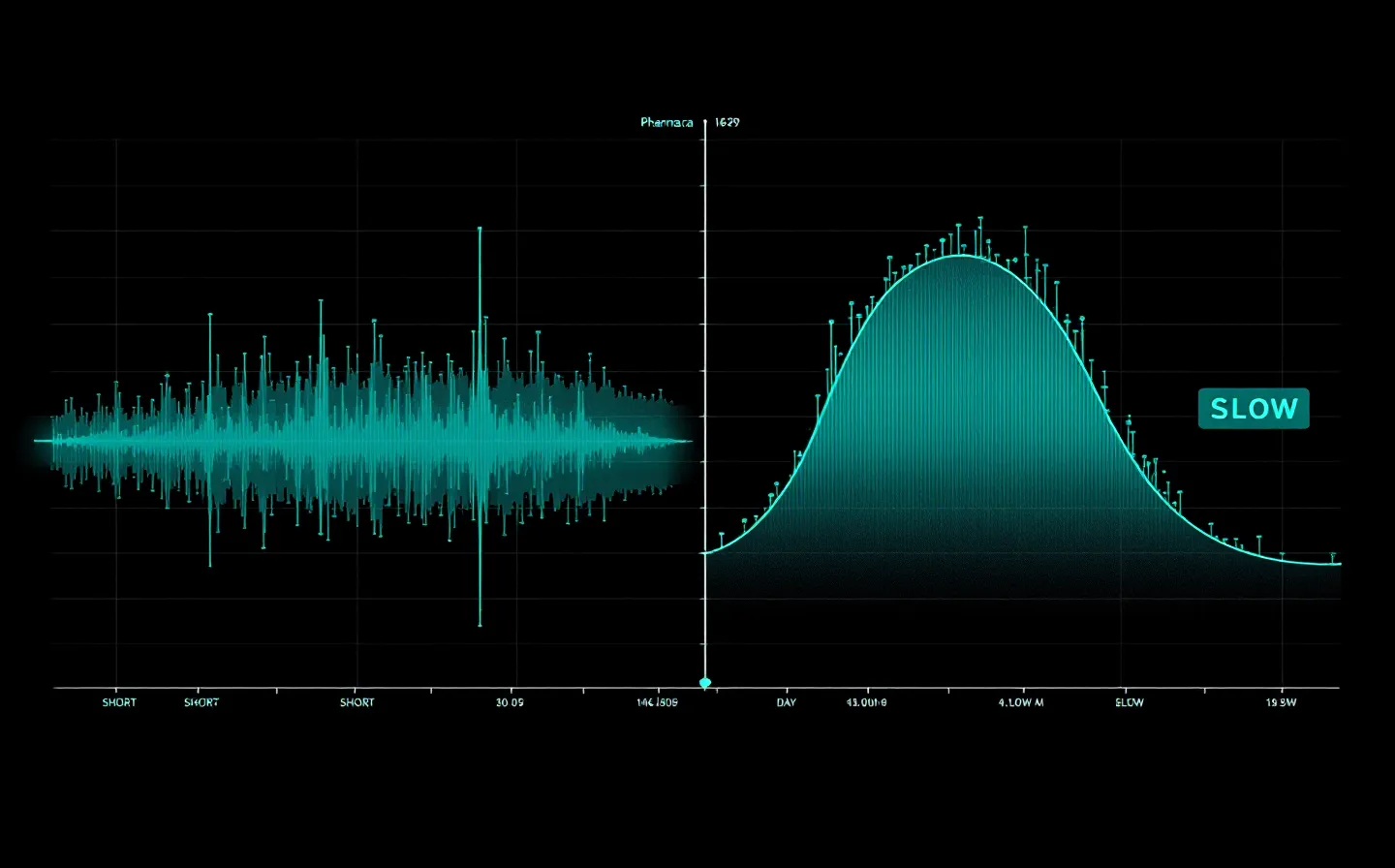
The long version remains in blood for days
Half-life means the time needed for half a drug to leave. That timing separates cjc 1295 dac from mod grf 1-29. The first label means a version with a chemical hook. The second means the short version without that hook.
- Long-lasting CJC-1295: about
6–8 daysin people. It holds onto albumin, a blood protein. Scientists still found the drug in rat blood after 72 hours [5][1]. - Short CJC-1295:
minutes to about 30 minutes. A blood enzyme breaks it down fast. - Ipamorelin: less than about
2 hoursin rat blood. Growth hormone reached its highest point near 40 minutes. A sound human figure hasn’t been published.
The long version keeps growth hormone raised between ipamorelin’s short rises. Earlier work joined two brief-acting proteins [3]. Researchers didn’t study a days-long rise that way [1]. You may get different results from those two timings. Your doctor can explain to you why that could matter to your health.
Cold storage facts aren’t shot instructions
Researchers put the drugs under the skin or into a vein. Animal tests also used a steady pump and a nose spray. For you, those details only describe how the studies were done.
Lab workers froze the dry drug. They later mixed it with germ-free water containing 0.9% benzyl alcohol, which slows germ growth. Then they kept the liquid at 2–8 °C. It can weaken over several weeks. Shaking and repeated freezing can cause more damage. Blood enzymes break down short hormone copies. Long-lasting CJC-1295 resists that breakdown [5]. Storage facts can’t show you a safe way to give a shot. They can’t prove to you the drug is safe.
Human research ended before the mixed product was tested
The long-lasting drug reached Phase 2, a later test for benefit and harm. That work then stopped. One person had a serious problem during Phase 2. The report didn’t name the problem, so you can’t judge it. The authors said it didn’t fit the known way the drug raises growth hormone. You’re still left with an unanswered safety concern. Earlier Phase 1 work gave healthy adults a first safety check [1]. Researchers also studied ipamorelin for bowel trouble after surgery. Two related drugs moved food through rats’ bowels [11][12]. That rat finding can’t answer questions about sleep, recovery, or blend safety. Ipamorelin never gained approval.
No published human study has given people ready-mixed CJC-1295 and ipamorelin. Every amount for the combined product remains untested. You’ll find only separate research amounts.